Future Projects
MacDill AFB Mangrove Restoration - Site 20A
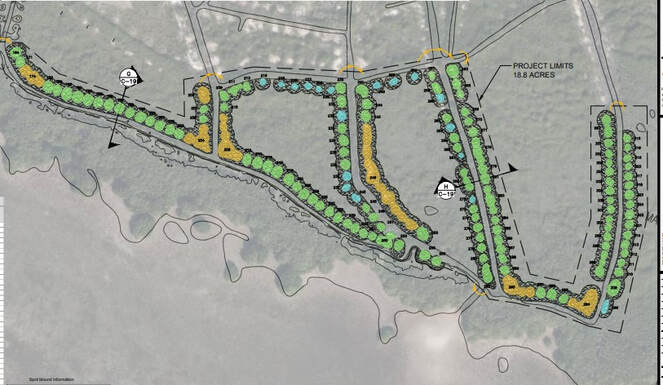 Location of Spoil Mounds to be recontoured at MacDill AFB
Ecosphere secured a $37,000 grant from the Environmental Protection Commission of Hillsborough County, matched by $100,000 from MacDill AFB, to complete restoration of the entire southern coastline of the base. These funds will be used to recontour spoil mounds associated with 115 mosquito ditches, restoring natural sheet flow and up to 37 acres of mangroves (up from the 5-7 acres originally envisioned).
Additional funds are being sought from the 2023 Tampa Bay Environmental Restoration Fund (90K) and the EPC Pollution Recovery Fund ($50K). Together, those funds would allow us to complete the final phase of the mangrove/saltern restoration efforts as part of MacDill’s Habitat Restoration Master Plan.
COST: $275,000+
PARTNERS: MacDill AFB, Environmental Protection Commission of Hillsborough County
Additional funds are being sought from the 2023 Tampa Bay Environmental Restoration Fund (90K) and the EPC Pollution Recovery Fund ($50K). Together, those funds would allow us to complete the final phase of the mangrove/saltern restoration efforts as part of MacDill’s Habitat Restoration Master Plan.
COST: $275,000+
PARTNERS: MacDill AFB, Environmental Protection Commission of Hillsborough County
MacDill Air Force Base Wildlife Study
The US Fish and Wildlife Service has requested that Ecosphere repeat the 2019 wildlife study we conducted for MacDill AFB. This work is tentatively scheduled for summer 2023. We will partner with Amphibian and Reptile Conservancy (ARC), another non-profit organization that specializes with herps and amphibians.
COST: $130,000
PARTNERS: MacDill AFB, US Fish and Wildlife Service, ARC
COST: $130,000
PARTNERS: MacDill AFB, US Fish and Wildlife Service, ARC
St. Pete Beach Living Seawall
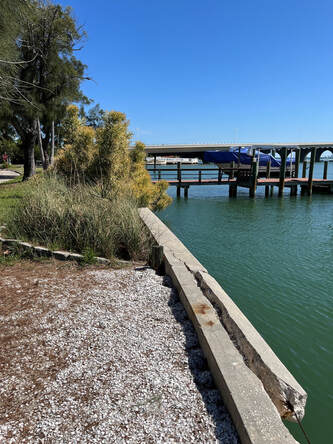 Existing, deteriorated seawall prior to enhancement
Ecosphere will be applying for a Tampa Bay Ecosystem Restoration Fund grant in 2023 to design and permit three seawall enhancement sites along South Maritana Drive. The engineering design that will result from this can be applied to at least 35 other adjacent waterfront properties. The approved designs will be made available to all residents with similar waterfront conditions for free, to encourage their use.


